
Are you searching for non-invasive pain relief in Surrey? ARKA Physiotherapy offers cutting edge laser therapy services with goals of pain relief, healing, and recovery. Using focused light energy, our team is able to treat many conditions from sports injuries and chronic pain to help patients return to their daily activities.
Laser therapy typically involves the following steps:
Before we start laser therapy, your physiotherapist assesses your case history and current condition to confirm laser therapy is the most appropriate course of treatment.
We clean the therapy area to ensure the laser light can penetrate and/or reach the desired depth.
We put you in a comfortable position to facilitate the therapist reaching the treatment site.
With a handheld laser device, your physiotherapist delivers target light energy to the treatment area. The sensation described is warmth or a tingling sensation with complete lack of pain.
The length of each laser therapy session usually is 10-30 minutes. This can vary depending on the condition being treated. Your therapist will develop a course of treatment based on the extent of your symptoms and the rate of progress.
During laser therapy, you can expect:
Comfortable Experience
Laser therapy is most commonly reported as a painless and relaxing experience
Fast Results
Many patients report a noticeable difference in their level of discomfort and increased range of motion after the first session.
Residents of Surrey love our laser therapy because there is no downtime after the treatment.
.laser therapy is commonly used to support recovery, reduce discomfort, and promote tissue repair in a variety of situations, including:
Chronic pain– assisting the healing process
Sports/activity-related injuries– sprains/strains, inflammation of tendons
Post Procedure– improving healing of damaged tissue
Healing of tissue– stimulating tissue healing
Muscle and joint problems- increasing range of motion and reducing pain
Musculoskeletal pain – back pain, neck pain, joint pain (e.g. osteoarthritis)
Tendonitis- tennis elbow, rotator cuff tendonitis
Sports injuries – sprains, strains, ligament injuries
Chronic Pain Conditions– fibromyalgia, chronic migraines, neuropathic pain
Wound Healing – slow healing wounds, helping the process of new tissue growth
Post-surgery– helping to control pain and promote healing of the surgical wound
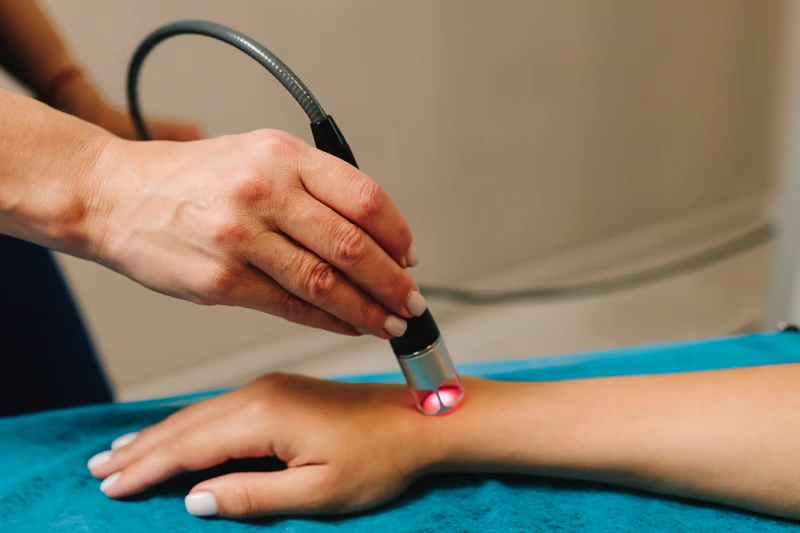
Non-invasive: This therapy is safe, with no surgery, no risk, and decreased pain
Pain and comfort support: This therapy helps to manage pain and discomfort, and increases comfort levels.
Fast recovery: This therapy speeds up the healing process of the body.
Eased Mobility: This therapy increases movement, flexibility, and overall comfort of the body.
Minimal Side Effects: This therapy is safe and recommended for most.
Laser therapy is commonly used as part of a physiotherapy treatment plan to support recovery, mobility, and overall physical function.
At ARKA Physiotherapy, a range of evidence-based treatment options, including laser therapy, are available to help individuals work toward their rehabilitation goals.
.
Laser therapy is used for the control of pain & inflammation & the stimulation of tissue healing. This therapy is used for the treatment of pain associated with musculoskeletal disorders and sports injuries, tendonitis & post surgery recovery in our Surrey clinic.
Laser therapy is a painless procedure. Patients feel a mild, gentle warmth and/or a tingling sensation.
A session of laser therapy at our Surrey clinic typically lasts 10-30 minutes, depending on the patient’s condition.
This is dependent on your condition, its severity and your individual response to therapy.
There is no downtime after a laser therapy session. You are able to perform your normal daily activities after the session.