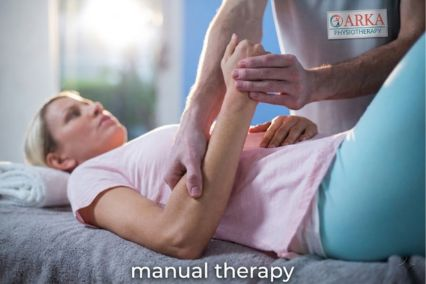
Manual therapy is a common treatment in physiotherapy. Your physiotherapist uses their hands to assess and treat muscle and joint pain. In British Columbia, all physiotherapists must follow the standards set by the College of Health and Care Professionals of BC (CHCPBC). This ensures safe, ethical, and evidence-based care.
This guide explains what manual therapy is, how it works, what it treats, and what to expect during a session.
What is Manual Therapy?
Manual therapy means hands-on treatment. Your physiotherapist uses their hands to move joints, muscles, and nerves. The goal is to reduce pain, improve movement, and help you recover.
Manual therapy is rarely used alone. It works best when combined with exercise, education, and other active treatment.
How Does Manual Therapy Work?
Manual therapy helps your body in several ways:
1. Pain Relief
Hands-on techniques stimulate nerve receptors in the skin and muscles. This can reduce the pain signals sent to your brain.
2. Better Joint Movement
Stiff joints from injury or arthritis can be gently moved. This restores normal range of motion.
3. Muscle Relaxation
Soft tissue techniques ease muscle tension and spasms.
4. Better Blood Flow
Manual therapy improves circulation in treated areas. This helps tissue heal faster.
5. Nervous System Benefits
Some techniques calm the nervous system. They can improve coordination and reduce pain sensitivity.
Manual therapy is not a quick fix. It works best as part of a full rehab plan.
What Conditions Does Manual Therapy Treat?
Manual therapy can help with many muscle and joint problems, including:
- Neck pain and stiffness
- Lower back pain
- Shoulder injuries (rotator cuff, frozen shoulder)
- Sports injuries
- Whiplash
- Stiff joints after surgery or rest
- Headaches caused by neck problems
- Sciatica and nerve pain
It is often used alongside exercise for the best results.
Types of Manual Therapy Techniques
Your physiotherapist will choose the right technique based on your needs.
1. Joint Mobilization
Slow, gentle movements applied to a joint to improve motion and reduce stiffness.
2. Joint Manipulation
A quick, precise movement applied to a joint. It is only used when suitable and with your consent.
3. Soft Tissue Therapy
Massage-like techniques used on muscles and connective tissue to ease tension.
4. Myofascial Release
This targets tight areas in the fascia — the tissue that wraps around muscles.
5. Trigger Point Therapy
Pressure is applied to tight “knots” in muscles that cause pain in other areas.
6. Neural Mobilization
Techniques to improve nerve movement and reduce irritation.
Your therapist picks the best technique based on your specific condition.
Benefits of Manual Therapy
When used correctly, manual therapy can:
Relieve Pain
Many patients feel less pain after a session. This helps them do rehab exercises more easily.
Improve Movement
Restoring joint and muscle movement helps with daily tasks like walking, lifting, and turning your head.
Speed Up Recovery
Combined with exercise, manual therapy can help you recover more quickly from injury.
Improve Function
Patients often find it easier to work, exercise, and do daily activities.
Reduce Muscle Tension
Very helpful for stress-related tightness or poor posture.
Results can vary. They depend on your condition, how long you have had it, and how well you follow your rehab plan.
What to Expect in a Session
A typical session includes these steps:
1. Assessment
Your physiotherapist asks about your history and tests your movement.
2. Diagnosis
They form a working diagnosis based on their findings.
3. Treatment Plan
Manual therapy may be part of a plan that includes exercises and education.
4. Hands-On Treatment
Your therapist applies the right techniques for your condition.
5. Exercise Prescription
You get specific exercises to keep improving between sessions.
6. Reassessment
Your progress is tracked and your treatment is adjusted as needed.
You may feel mild soreness after the first few sessions. This is normal and usually passes quickly.
Safety and Standards in British Columbia
In BC, physiotherapists follow strict rules set by the CHCPBC. These rules ensure:
- Treatments are based on evidence
- You give informed consent before treatment
- Your choices are respected
- Techniques are used safely and correctly
- Risks and benefits are clearly explained
- Records are kept and care is accountable
Manual therapy must be clinically justified. It should never be applied as a routine without proper assessment.
Is Manual Therapy Right for You?
Manual therapy is not suitable for everyone. It may not be right if you have:
- A fresh fracture or unstable injury
- Severe osteoporosis
- Active infection or inflammation
- Certain blood vessel conditions
- Other contraindications found during assessment
Your physiotherapist will always check if it is safe for you before starting.
Manual Therapy vs Exercise Therapy
Manual therapy is not a standalone treatment. Research shows:
- Manual therapy gives short-term pain relief
- Exercise therapy gives long-term functional improvement
Modern physiotherapy uses both together. Manual therapy helps “open the window” for movement. Exercise keeps that improvement going.
What Does the Evidence Say?
Research supports manual therapy as part of a combined treatment approach. It works best alongside active rehab strategies.
Best practice guidelines in physiotherapy focus on:
- Patient education
- Active recovery
- Functional exercise programs
- Limited use of passive treatments alone
This is in line with standards across Canada and internationally.
Conclusion
Manual therapy is a proven physiotherapy treatment. It helps reduce pain, improve movement, and support recovery. In BC, it is delivered safely by licensed physiotherapists under CHCPBC standards.
It works best when combined with exercise and your active involvement in recovery.
If you have muscle or joint pain, book a physiotherapy assessment. Your therapist can tell you if manual therapy is right for you.
Frequently Asked Questions (FAQs)
1. Is manual therapy painful?
No. It should not be painful. Some techniques may cause mild soreness, but your therapist will adjust to your comfort level.
2. How many sessions do I need?
It depends on your condition. Some patients improve in a few visits. Others need longer rehab.
3. Is manual therapy safe?
Yes, when done by a licensed physiotherapist. It follows strict professional guidelines in BC.
4. What is the difference between massage and manual therapy?
Massage mainly relaxes soft tissue. Manual therapy also includes joint and nerve techniques based on clinical assessment.
5. Can manual therapy fix chronic pain?
It can reduce symptoms and improve function. But long-term management also needs exercise, education, and lifestyle changes.
References
Canadian Physiotherapy Association – Clinical Practice Guidelines
https://physiotherapy.ca/resources
World Confederation for Physical Therapy (WCPT) – Manual Therapy Overview
https://world.physio/resources
PubMed – Evidence for Manual Therapy in Musculoskeletal Pain
https://pubmed.ncbi.nlm.nih.gov/ (Search: manual therapy musculoskeletal effectiveness)