🩹 Understanding and Treating Muscle Knots
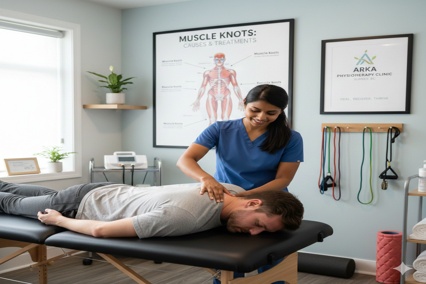
Many people will at some point in their lives get myofascial trigger points, also known as muscle knots. These knots, consequently, could hurt, make you feel uncomfortable, or even make it hard for you to move around. Any TIGHT, TENDER SPOT you may have noticed on your body most likely comes from a muscle knot. If the pain gets too bad, we suggest you contact a physiotherapist in Surrey, British Columbia right away. If you are looking for physiotherapy near me, the following section discusses what muscle knots are, their symptoms, and the most effective ways to treat them.
What Are Muscle Knots and How Do They Show Up?
Technically called myofascial trigger points, these are small, extremely irritable patches in a muscle that remain contracted and unable to relax. Stretched muscular fibres or the surrounding connective tissue (fascia) create a sharply felt, small band or node. As a result, this ongoing contraction limits blood supply; therefore, metabolic waste items build up and cause localized discomfort.
Moreover, they appear in two different varieties:
- First, you feel a stiff, rope-like lump or a little, painful nodule buried inside the muscle tissue when you push the region. When touched, they are extremely sensitive and often cause a strong, negative reaction.
- Second, they comprise a persistent, low pain or throbbing sensation, often leading to stiffness and a limited range of motion (e.g., difficulty turning the neck). A notable symptom is referred pain, in which a knot causes pain in far-off parts of the body (for example, a headache brought on by a knot in the upper back).
The most common causes of back discomfort are long-term stress, bad posture, repetitive strain, and a quick injury.
⚠️ Primary Causes of Muscle Knots
Medical professionals call myofascial trigger points "muscular knots." Pain can result from these rigid, tiny areas in your muscle fibres. Specifically, here are fourteen often occurring reasons and contributing elements in their growth:
Factors Adding to Strain and Tension
- Emotional and Mental Stress: High amounts of stress and anxiety can lead you to clench or tighten your muscles over a long period of time, usually without even knowing it. Consequently, this could lead to knots.
- Insufficient Sleep/Exhaustion: Muscles that are overly exhausted or lack adequate sleep are also more prone to tighten and generate trigger points.
- Problems with Sleep: Not enough good sleep or having insomnia prevents your muscles from relaxing completely and healing, thus maintaining your tension all the time.
🏋️ Problems with Mobility and Physical Stress
- Muscle Overuse or Overexertion: Regularly pushing the same muscle group hard, especially if you're trying a new exercise or workout that's really intense, without enough conditioning.
- Repetitive Motions: Similarly, in a job, hobby, or sport, such as typing, lifting, or continuous hammering, repeat the same actions again and again.
- Acute Injury or Trauma: Muscle strains, sprains, or damage to the muscle tissue itself can cause a knot as a form of self-protection.
🧘 Lifestyle and Position
- Bad Posture: Leaning across a desk, drooped over, or holding a phone between your ear and shoulder are some examples of extended uncomfortable body positions.
- Sitting Too Much or Not Moving Enough: Staying in one place for a long time, staying in bed for a long time, or sitting down for long stretches of time can make your muscles weaker and cause the fibres to stick together. This, in turn, creates knots.
- Not Good Ergonomics: Muscles assume uncomfortable posture when a desk is poorly designed, such as with the monitor too high or low or a chair without support.
Metabolic Problems and Those Related to Recovery
- Poor Warm-up/Cool-down: Not warming up correctly before or cooling down and stretching following exercise may make muscles tight and consequently prone to knots.
The Best Methods for Healing Muscle Knots
Muscle knots, or trigger points, develop when muscle fibres remain tense and irritated. Quick relief from them can be found by:
- Heat Treatment: To begin with, try a warm heating pad or a hot shower to loosen tense muscles and increase circulation.
- Soft Stretching: Next, gentle, deliberate stretches help mobility and ease tension.
- Massage or Release of Trigger Points: Apply light pressure on the knot for 20–30 seconds using your fingers, a foam roller, or a massage ball.
- Hydration: Drink lots of water to keep muscles from being tight and thus aid recovery.
- Rest and Movement Balance: Furthermore, to avoid tightness, move with light exercise and prevent overuse.
- Physiotherapy: Finally, targeted treatments from a physiotherapist include dry needling, manual therapy, and guided exercises.
10 Tips for Preventing Muscle Knots
In addition to treatment, here are practical tips for prevention:
- Stay Active: Move regularly to keep muscles loose and flexible.
- Stretch Daily: Stretch neck, back, and shoulders to prevent tension.
- Stay Hydrated: Drink water to keep muscles healthy and reduce stiffness.
- Practice Good Posture: Sit and stand straight to avoid muscle strain.
- Take Breaks: Stand, stretch, and move especially if you sit for long hours.
- Exercise Regularly: Strengthen muscles with yoga, Pilates, or swimming.
- Manage Stress: Relax with deep breathing, meditation, or hobbies.
- Sleep Well: Use a supportive mattress and sleep in a comfortable position.
- Avoid Overuse: Take breaks during repetitive tasks or heavy lifting.
- Warm-Up Before Activity: Prepare muscles with light stretches before exercise.
✅ Conclusion
Muscle knots in your neck or lower back can be uncomfortable and frustrating, but they don’t have to control your life. By understanding what causes them and how to treat them, you can take steps to ease the pain and prevent future knots. Therefore, remember to stay active, practice good posture, and listen to your body. However, if the pain persists or worsens, don’t hesitate to seek the help of a physiotherapist. With the right care, you can keep your muscles healthy, relaxed, and knot-free!
If you need an experienced physiotherapist, consult us at Arka Physiotherapy Clinic in Surrey, Canada. We have helped patients like you heal muscle knots and live pain-free.